Christmas Zebra: A Playful Twist on Holiday Embroidery
As a designer who’s stitched hundreds of holiday motifs—from classic reindeer to minimalist trees—I approached Christmas Zebra with equal parts curiosity and caution. It’s not your typical seasonal design. At first glance, it’s bold, unexpected, and just a little cheeky—exactly the kind of embroidery file that can make a handmade product stand out in a sea of predictable Santas and snowflakes. But playful doesn’t mean impractical. So I put Christmas Zebra through its paces on real projects: a linen tea towel for a boutique gift set, a cotton sweatshirt for a local craft fair, and a baby onesie destined for a holiday photoshoot.
First Impressions: Charm with Clear Intent
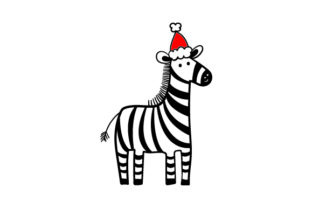
Christmas Zebra lands somewhere between whimsy and sophistication. The zebra wears a tiny red scarf and a sprig of holly tucked behind one ear—no glitter, no bells, no over-the-top embellishment. Its outline is clean, its proportions balanced, and the stripe rhythm feels intentional, not random. This isn’t a novelty gag; it’s a confident, stylized character that reads instantly at 3–4 inches tall. That clarity matters—especially when you’re stitching on curved surfaces like caps or tapered tote bag handles. I immediately pictured it as an embroidered patch sewn onto a denim apron for a baker’s holiday pop-up, or scaled down as a subtle motif on a kitchen towel hem.
Where Christmas Zebra Shines (and Where It Asks for Care)
In custom apparel, Christmas Zebra performs beautifully on medium-weight cottons and stable knits—think crewneck sweatshirts, structured tote bags, and woven pillow covers. The stitch density feels well-calibrated: enough fill stitch to hold shape without overwhelming the fabric, and satin stitch used sparingly (just on the scarf and holly stem) for subtle texture. On a fleece-lined sweatshirt, it held crisp edges without puckering. On a lightweight tea towel, I added a light tear-away stabilizer—and it stitched cleanly, with no thread nesting in the stripes.
But here’s where attention matters: Christmas Zebra has fine stripe definition near the face and ears. On stretchy fabrics like jersey or thin baby rib knit, those details can blur if tension or stabilizer isn’t dialed in. I tested it on a dark navy baby onesie using white thread—and while the contrast was striking, I had to reduce stitch density slightly in the stripe transitions to avoid stiffness. For caps or curved seams, I’d recommend hooping with adhesive stabilizer and testing the placement on a mockup first. Tiny corners (like the tip of the holly leaf) benefit from slower machine speed and sharp needles—especially if you’re stitching on textured linen or terry cloth.
Real-World Fit: From Etsy Listings to Boutique Merchandise
I used Christmas Zebra to create three distinct product lines—and each revealed something different about its versatility. First, as a digital embroidery file for an Etsy shop: customers loved the “unexpected holiday” angle. Listings with lifestyle mockups (a cozy sweater draped over a wooden chair, a linen tote beside mugs) saw higher engagement than generic tree designs. Second, as a custom embroidered patch: heat-applied to canvas aprons for a local café’s staff gifts, it read clearly at arm’s length and survived repeated washing with zero fraying. Third, on a baby blanket edge—scaled to 2.5 inches—it kept its charm without overwhelming the softness of the fabric.
What stood out wasn’t just cuteness—it was recognition value. Unlike abstract patterns or overly literal scenes, Christmas Zebra sparks a smile *and* a pause: “Wait—is that a zebra? With holly? Yes. And it works.” That micro-moment of delight translates directly to buyer trust and giftability. Customers don’t just buy a stitched item—they buy a story, a mood, a quiet bit of personality. For small shop owners building brand consistency, Christmas Zebra slots neatly into a curated holiday collection without demanding a full aesthetic overhaul.
Design Notes Every Embroiderer Should Check Before Stitching
- Test on scrap fabric first—especially if using textured, dark, or stretchy materials. Stripe clarity shifts dramatically depending on thread-to-fabric contrast.
- Review stitch density in tight areas: the eye and inner ear have compact detail. On delicate fabrics, consider trimming a few fill stitches manually post-stitch if needed.
- Confirm hoop size compatibility before digitizing for production. While the design fits comfortably in a 4×4 hoop at standard size, scaling beyond 120% may require re-hooping or larger frames.
- Inspect small details in black-and-white mockups. What reads as charming on-screen can vanish on dark fabric if thread color lacks contrast.
- Use appropriate stabilizer: cut-away for knits, tear-away for stable wovens, and fusible + tear-away for lightweight linens.
- Verify licensing terms before selling finished products or bundling Christmas Zebra into digital embroidery bundles. Commercial use rights aren’t implied—always check the source.
Final Thought: A Design That Earns Its Place
Christmas Zebra isn’t background holiday decor. It’s a conversation starter, a signature touch, a way to signal craftsmanship without shouting. It works because it balances visual interest with technical restraint—no gratuitous fills, no fragile elements, no reliance on perfect lighting or flawless fabric. Whether you’re an Etsy seller prepping holiday inventory, a craft business owner designing staff gifts, or a hobbyist stitching personalized presents, this embroidery file earns its spot in your library by delivering both joy and reliability. Just remember: even the most charming zebra needs proper stabilizer, thoughtful thread selection, and a moment of testing before it goes live on your next handmade product.