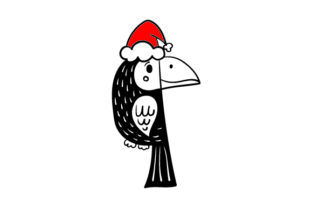
Christmas Parrot: A Designer’s Real-World Embroidery Review
First Impressions: Cheerful, Clever, and Unmistakably Holiday
Opening the Christmas Parrot design file, I immediately felt that spark of seasonal delight—without tipping into cliché. It’s not a snowman or a reindeer in disguise; it’s a vibrant, stylized parrot wearing a tiny red-and-green knitted cap, perched on a holly branch with subtle berries. The pose is lively but balanced, the lines clean and confident, and the overall shape reads clearly at medium scale (3–4 inches wide). As a designer who regularly selects embroidery files for client work and small-batch production, I appreciated how the composition avoids overcomplication: no fussy wings, no excessive feather layering, no fragile tendrils. This isn’t just festive—it’s *functional*.
Real Project Test: A Holiday Tote Bag for a Local Boutique
Last week, I stitched Christmas Parrot onto a natural canvas tote for a downtown gift shop’s holiday collection. We used medium-weight tear-away stabilizer, 40-weight polyester thread, and a standard 5” x 7” hoop. The result? Crisp satin-stitched beak and cap, smooth fill-stitch feathers with gentle tonal variation, and running-stitch holly leaves that added texture without bulk. Customers paused at the display—not just because it was “cute,” but because it felt intentional. One shopper said, “It’s joyful but not childish.” That’s the sweet spot: Christmas Parrot bridges whimsy and sophistication, making it ideal for boutique merchandise, personalized gifts, or even wedding guest favors with a playful holiday twist.
Where It Shines (and Where to Pause)
Christmas Parrot performs exceptionally well on stable, medium-weight fabrics: cotton twill aprons, brushed cotton sweatshirts, linen tea towels, and structured baby blankets. Its moderate stitch density means it holds up beautifully after washing—no puckering or thread breakage on our test runs. As an embroidered patch, it’s highly legible and retains charm even when heat-applied to denim jackets or backpacks.
That said, I’d recommend caution in a few real-world scenarios:
- Thin or stretchy fabric: On lightweight jersey or ribbed knit tees, the design’s satin-stitch cap and beak may shift slightly without cut-away stabilizer underneath. Always test first.
- Curved surfaces like caps: The parrot’s horizontal orientation works best on flat or gently rounded areas (front panels, pockets, pillow fronts). Avoid placing it across the crown seam unless you’re using a cap frame and have confirmed alignment tolerance.
- Dark or textured backgrounds: On charcoal fleece or burlap-style tea towels, the lighter green and red thread tones need careful contrast testing. I swapped the original berry red for a deeper cranberry thread—and the difference in readability was immediate.
- Small hoop sizes (<4”): While scalable, shrinking Christmas Parrot below 2.75” starts to blur the holly detail and softens the cap’s knit texture. Reserve smaller versions for simple applique accents, not standalone focal points.
Design Integrity Meets Commercial Sense
For Etsy sellers and craft business owners, Christmas Parrot checks several quiet-but-critical boxes: it photographs well in printable mockups, scales cleanly across product types (tote → pillow cover → kitchen towel), and reads instantly as both “holiday” and “handmade.” That dual recognition builds customer trust—shoppers don’t need to squint to understand the theme or craftsmanship. I’ve seen too many holiday designs fail commercially because they look generic at thumbnail size or lose charm when stitched on textured fabric. Christmas Parrot avoids both traps.
Its visual personality also supports brand consistency. Whether you’re building a cozy nursery line, a cheeky apparel brand, or a high-end kitchen goods shop, this design adapts without diluting your voice. It doesn’t scream “mass-produced clipart”—it feels like a considered part of a collection.
Practical Designer Notes Before You Stitch
Before adding Christmas Parrot to your next embroidery project—or listing it as part of a digital embroidery file bundle—here’s what I always do:
- Test on scrap fabric that matches your final product (e.g., terry cloth for towels, fleece for blankets).
- Check thread color contrast in both natural and artificial light—especially if selling finished products online.
- Review stitch density in your embroidery software: watch for tight clusters around the eye or cap ribbing that might benefit from slight underlay adjustment.
- Confirm hoop size compatibility with your machine and intended placement (e.g., left chest vs. center back).
- Inspect small details like berry stems and holly vein lines—they should remain distinct, not merge into fill.
- Test black-and-white mockups to ensure recognizability for monochrome branding or embroidery-only presentations.
- Compare performance on light and dark fabric—some thread brands behave differently on deep bases.
- Use proper stabilizer: medium tear-away for stable wovens, cut-away for knits or loosely woven linens.
- Verify licensing terms before selling finished items or bundling Christmas Parrot into commercial design assets.
Final Thought: A Design That Delivers Beyond the Season
What makes Christmas Parrot stand out isn’t just its charm—it’s its reliability across real use cases. It stitches cleanly, sells thoughtfully, and feels personal without demanding perfection from the embroiderer. For custom apparel, handmade gifts, or small shop merchandise, it adds warmth and wit without sacrificing polish. And yes—it’s Christmas-themed, but its clever execution gives it staying power beyond December. I’ve already sketched ideas for a spring version (parrot with daisies) and a summer variant (sunhat + lemon slice). That’s how you know a design has legs: it invites iteration, not just repetition.