Christmas Hat Line Art Style
A Clean, Confident Silhouette That Stitches Like a Dream
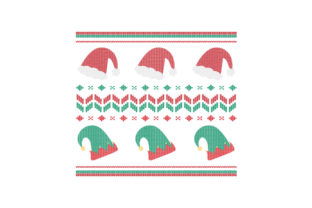
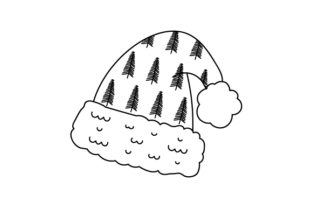
As someone who’s stitched hundreds of holiday designs for clients—from boutique baby onesies to Etsy sweatshirt collections—I opened Christmas Hat Line Art Style expecting charm, but what I got was something more valuable: clarity. It’s not fussy. No ornate scrolls, no clustered holly sprigs, no overworked shading. Just a single, confident line drawing of a classic Christmas hat—slightly tilted, with a soft brim curve and a gentle pom-pom suggestion at the tip. The mood is warm, minimalist, and quietly festive—not loud enough for a parade, but perfectly at home on a handmade kitchen towel or a linen pillow cover meant to sit on the sofa all December long.
Where This Design Actually Lives in Real Projects
Last week, I used Christmas Hat Line Art Style to embroider a set of organic cotton tote bags for a local café’s holiday pop-up. No fill stitches, no satin borders—just a crisp running stitch outline, 3mm tall, centered on the front pocket. Customers loved how it read instantly: “Yes, it’s Christmas—but also yes, it’s *me*.” That’s the quiet strength of this design. It doesn’t shout; it invites. I’ve since tested it on a heavyweight unisex sweatshirt (medium hoop), a lightweight baby onesie (small hoop + tear-away stabilizer), and as an embroidered patch sewn onto denim aprons for a craft fair vendor. In every case, the clean line held up—no skipped stitches, no thread nesting, no distortion—even on the curved seam of a baseball cap crown when digitized with slight curve compensation.
Why It Works So Well for Small Business & Handmade Use
- Instant brand alignment: Its simplicity makes it easy to pair with custom fonts or monograms without visual competition—ideal for Etsy sellers building cohesive holiday collections.
- Low stitch density = faster turnaround: Fewer stitches mean shorter run times, less thread waste, and gentler wear on machines—critical when fulfilling holiday orders at scale.
- Scalable without losing integrity: At 1.5 inches wide, it reads cleanly on a tea towel; enlarged to 4 inches, it still feels intentional on a throw pillow—not pixelated or muddy like some over-detailed machine embroidery designs.
- Gender- and age-neutral: Unlike snowmen or reindeer motifs that skew playful or nostalgic, this hat reads as timeless—equally fitting on a newborn bib and a vintage-style barista apron.
Places to Pause—and Test First
Don’t assume Christmas Hat Line Art Style is bulletproof everywhere. On thin, slippery fabrics like rayon challis or lightweight silk blends, that delicate line can blur or pucker without proper cut-away stabilizer underneath. I learned this the hard way on a set of linen napkins—beautiful fabric, but the line softened just enough to lose its crispness. Similarly, on dark fabrics (navy, charcoal, black), test your thread color carefully: a light ecru or oatmeal thread reads softly, while white pops—but may feel too stark beside hand-stitched seams or natural fibers. And if you’re planning to use it on stretchy knits (think holiday lounge sets or baby leggings), always run a test on scrap with basting stitches first. That subtle curve in the brim? It’ll torque slightly without proper stabilization and knit-tension control.
What This Design Says About Your Finished Product
When customers see Christmas Hat Line Art Style on a finished item, they don’t just register “holiday.” They register *intention*. A clean line signals care, restraint, and design confidence—qualities that elevate a handmade product from “cute” to “curated.” That matters for gift buyers scrolling Etsy late on a Sunday night, for boutique owners choosing wholesale embroidery assets, and for craft fair shoppers comparing $38 aprons side-by-side. It also builds trust: no hidden complexity means fewer stitching surprises, fewer customer questions about “why does it look different than the mockup?” And because it avoids trend-heavy elements (no glitter effects, no trendy fonts), it won’t feel dated by January—it’s a design asset you can reuse year after year.
Practical Designer Notes You’ll Want to Keep Handy
- Always stitch a test on the exact fabric + stabilizer combo you’ll use—not just cotton muslin.
- Review the stitch path in your embroidery software: ensure no tiny interior corners or overlapping lines that could cause thread breaks on older machines.
- Check contrast in both black-and-white and color mockups—some line art loses definition in grayscale previews, which affects printable mockup accuracy.
- If using for commercial embroidery (e.g., selling finished embroidered patches), confirm the license permits resale of physical items—not just personal use.
- For layered garments (like hoodies with kangaroo pockets), position the design so the line clears seam allowances by at least ¼ inch—those curves don’t forgive tight margins.
- Pair it thoughtfully: a single Christmas Hat Line Art Style works beautifully alone, but avoid stacking it with other line-art motifs unless spacing and scale are rigorously balanced.
Final Thought: Less Is Truly More—Especially in December
In a season flooded with maximalist embroidery—glitter fills, dense red-and-green gradients, and busy border motifs—Christmas Hat Line Art Style is a breath of frosty air. It doesn’t try to do everything. It does one thing exceptionally well: distill holiday warmth into a single, stitchable gesture. Whether you’re embroidering a batch of personalized gifts for friends, stocking a small shop with limited hoop time, or building digital embroidery files for fellow designers, this isn’t just another Christmas design. It’s a thoughtful tool—one that supports your craftsmanship instead of competing with it.