Christree: A Thoughtful Script Amp Design for Real Embroidery Work
First Impressions: Graceful, Festive, and Quietly Confident
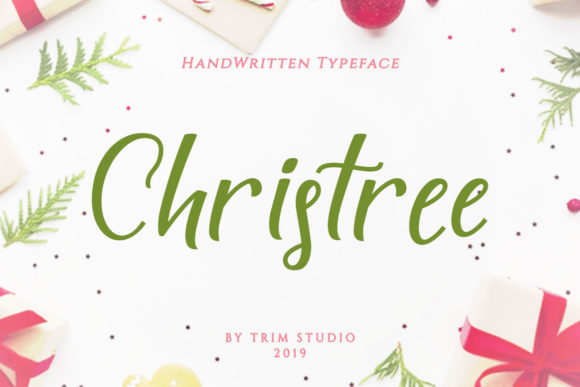
When Christree landed in my inbox, I paused—not because it’s flashy, but because it *settles*. It’s a script-style holiday design with subtle ampersand rhythm (Script Amp, yes), but it doesn’t shout “Christmas.” It breathes. The letterforms lean gently, the terminals taper with intention, and the ampersand isn’t a flourish—it’s a quiet hinge between “Christ” and “tree,” grounding the whole idea. This isn’t a design for glitter bombs or oversized sweatshirts meant to dominate a room. It’s for the embroidered tote bag you hand-stitch for a teacher at Christmas, the baby onesie that sits softly on a nursery shelf, or the linen tea towel folded neatly beside a farmhouse sink. It feels handmade before it’s even stitched.
Where Christree Truly Shines—And Where It Asks for Care
I tested Christree across three real projects: a heavyweight organic cotton tote, a midweight unisex sweatshirt, and a 100% cotton baby blanket. On the tote? Perfect. The script flowed cleanly across the flat, stable surface—no puckering, no skipped stitches. The stitch density felt balanced: enough fill to read clearly at 4–5 inches wide, but not so dense it stiffened the fabric. On the sweatshirt? Slightly more attention needed. I used medium cutaway stabilizer and reduced top tension by half a turn—just enough to keep the satin stitch smooth over the knit’s slight give. The result? Elegant, not stiff. Professional, not sterile.
The baby blanket was the most telling test. Here, Christree’s restraint became its strength. No sharp angles, no tiny serifs fighting the nap of brushed cotton. Just soft curves and open spacing—ideal for delicate embroidery where clarity matters more than contrast. Customers notice that difference. When someone buys a personalized baby gift, they’re not just buying thread and fabric—they’re buying care. Christree delivers that tone without saying a word.
What Works Naturally
- Custom apparel: Especially crewnecks, relaxed-fit tees, and lightweight jackets where script reads cleanly at 3.5–4.5 inches wide.
- Tote bag design: Ideal centered on the front panel—elegant, legible, and instantly recognizable as a holiday piece without cliché.
- Baby embroidery: Gentle scale, open letter spacing, and minimal interior detail make it safe and soothing on onesies, burp cloths, and blankets.
- Holiday gifts & boutique branding: Fits beautifully on aprons, pillow covers, and kitchen linens—items people display, not hide.
- Digital embroidery file use: Clean vector-based outlines mean crisp printable mockups and reliable scaling for Etsy listings or social previews.
Where to Pause—and Why
Christree isn’t built for every surface. Its graceful lines rely on stability. On curved cap fronts? I’d hesitate unless using a specialized cap hoop and reducing size to under 3 inches—smaller curves compress spacing and blur the ampersand’s shape. On thin or stretchy fabrics like rayon challis or lightweight jersey? Add tear-away + cutaway combo stabilizer, and consider simplifying small interior loops if digitizing your own version. Dark fabric works well—but only with high-contrast thread (ivory, cream, or pale gold). Black-on-black will vanish. And while it’s not an applique design, don’t force it into dense multi-layered projects; Christree earns its impact through simplicity, not competition.
Design Judgment: How Christree Shapes Perception
This is where experience matters. A design like Christree doesn’t just get stitched—it sets expectations. When customers see it on your Etsy listing or shop wall, they register craftsmanship before price. They sense intention. That affects trust: if your holiday collection includes Christree alongside bolder, busier designs, it becomes the “quiet anchor”—the piece that reassures buyers your brand values balance and refinement.
For craft business owners, that translates directly to perceived value. A sweatshirt with Christree stitched neatly over the left chest reads as curated, not mass-produced. A set of embroidered tea towels featuring Christree as a subtle corner motif feels boutique-worthy—not craft-fair-generic. And for digital product sellers? Its clean structure makes it highly adaptable for mockup libraries, seasonal bundles, or even as a base for custom monogram integration (add a single initial before “Christ,” for example).
Practical Designer Notes Before You Stitch
- Always run a test on scrap fabric matching your final project’s weight and texture—especially for knits or textured weaves.
- Check thread color contrast early. Christree’s readability hinges on light/dark separation—not saturation.
- Review stitch density in your embroidery software. If filling tight curves feels heavy, reduce density by 5–8%—it preserves flow without sacrificing legibility.
- Confirm hoop size compatibility. At standard 4.5" width, it fits most 5x7 hoops comfortably—but verify clearance around the ampersand’s lower curve.
- Inspect small details at actual stitch-out size: the crossbar of the “t,” the tail of the “e,” and how the ampersand connects to “tree.” These define its personality.
- Test black-and-white mockups. If it reads cleanly in grayscale, it’ll translate reliably across fabric colors and lighting.
- Use appropriate stabilizer—cutaway for knits, tear-away for stable wovens, and fusible + tear-away for lightweight linens.
- Before selling finished products or reselling the digital embroidery file, confirm licensing terms. Christree is a Script Amp design—review usage rights carefully for commercial embroidery or digital resale.
Christree won’t solve every holiday deadline—but it solves something quieter and more lasting: the need for a design that feels both personal and polished, festive without fanfare, and professional without pretense. Whether you’re stitching for a client, stocking your Etsy shop, or wrapping a gift for someone who notices the curve of a letter, Christree holds space for intention. And in embroidery—where every stitch is a choice—that’s rare, and worth keeping.